Why I Stopped Sending ECU Jobs to the Dealer — And What Tool Changed That
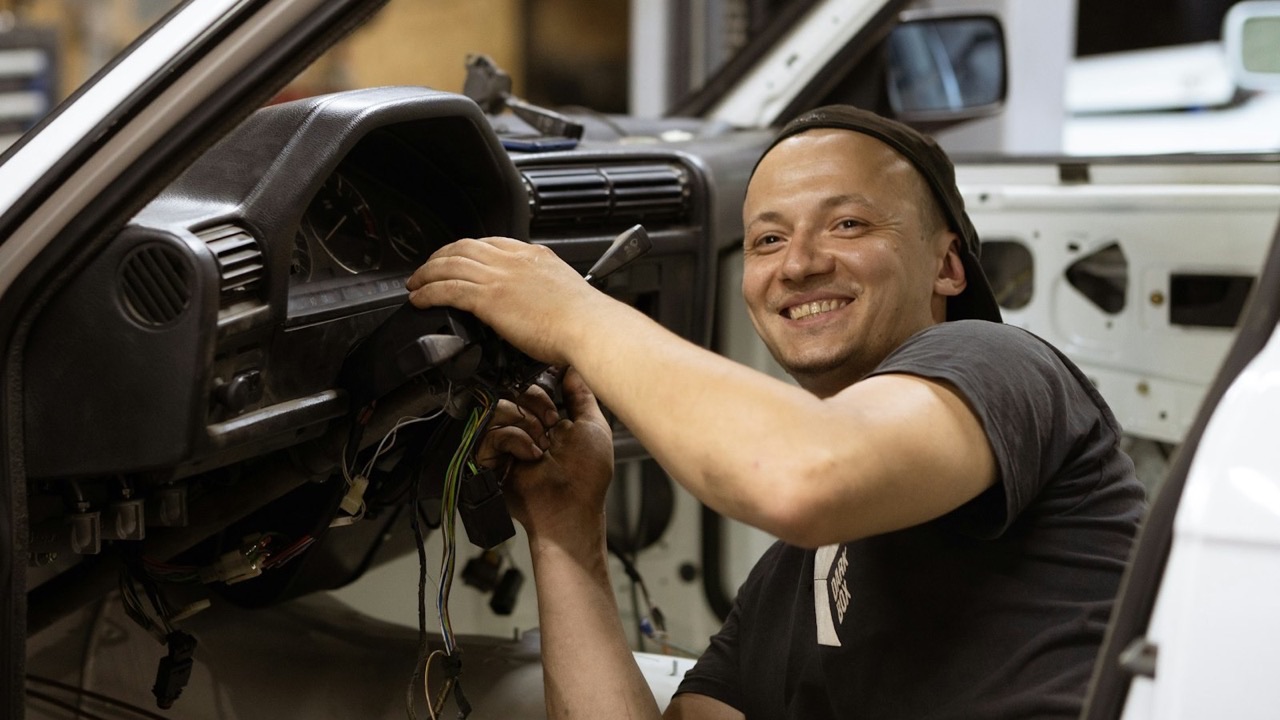
For the first few years of running my own workshop, there were certain jobs I just didn’t touch. ECU programming was one of them. Any time a customer came in needing that kind of work — a replacement module that needed to be matched to the car, a software update from the manufacturer, anything that went beyond reading fault codes — I’d send them to the dealer. It felt like the safe move.
The problem is, sending a customer away has a cost. Not just the job you lose, but the relationship. People remember where they went when their trusted shop couldn’t help them.
So I started looking seriously at what it would take to bring ECU work in-house.
What I Didn’t Understand About ECU Programming
Before I get into the tool, it helps to understand what ECU programming actually involves — because I had the wrong picture of it for a long time.
The ECU (Engine Control Unit) is the brain of the car. It controls fuel injection, ignition timing, transmission behavior, emissions systems, and a dozen other things. When it works, you don’t think about it. When something goes wrong — or when a component gets swapped out — it needs to be told what to do again.
There are two things that often get mixed up: ECU coding and ECU programming.
Coding is like adjusting the settings on an existing program. Say you replace a battery on a BMW — you need to code the new battery into the system so the car’s charging behavior adjusts correctly. That’s coding. It’s working within the existing software framework.
Programming is bigger. It’s rewriting or updating the firmware itself. This is what happens when a manufacturer releases a software fix, when a replacement ECU arrives blank from the warehouse and needs to be configured to the car’s VIN, or when a performance shop wants to recalibrate how the engine behaves.
Both matter. And for a long time, I could do neither properly.
The Turning Point
A customer brought in a used BMW with a replacement ECU that had been sourced from another car. The module was physically fine but completely unmatched — the car wouldn’t start, the immobilizer was throwing fits, and the transmission wasn’t communicating properly with the rest of the system. A straightforward swap had turned into a multi-system problem because nobody had done the programming after the install.
I called around. The dealer quoted a significant wait time and a price that made the customer reconsider the whole repair. We ended up getting it done through a mobile programmer who charged well for the visit and took two days to schedule.
That’s when I decided I needed to be able to handle this myself.
What Makes a Tool Capable of This
Not every diagnostic scanner can do ECU programming. Most can read fault codes and do basic service resets. A step up from that handles bidirectional control and module adaptation. But ECU programming — especially online programming that connects to the manufacturer’s server in real time — requires a different level of hardware and software.
The key things I looked for:
J2534 support. This is a universal standard that lets the tool communicate with OEM software. Without it, you can’t use manufacturer-supplied programming files.
DoIP and CAN FD. Newer vehicles communicate differently than older ones. If the tool doesn’t support these protocols, it simply won’t be able to connect to a growing number of modern cars.
Online programming capability. Some ECU jobs can be done offline with a saved file. Others — especially on European brands — require the tool to authenticate with the manufacturer’s server and pull live data. That requires an active connection and a tool the server will actually talk to.
Topology mapping. This is more of a workflow feature, but it’s useful. It shows every module in the car as a network diagram so you can see which ones are communicating, which have faults, and how they relate to each other. It makes complicated multi-module jobs much easier to manage.
The Tool I Settled On
After comparing several options, I went with the Launch X431 PAD VII Elite. The specific version I use supports launch ecu programming across more than 30 car brands, which covers the bulk of what comes through my workshop — European, Asian, and domestic vehicles.
What sold me on it wasn’t any single feature but how the whole package held together. The J2534 pass-thru works properly, the DoIP and CAN FD support is built in rather than bolted on as an afterthought, and the online programming function connects reliably when the car requires manufacturer authentication.
The topology map has also become something I use on almost every complex job, not just ECU work. Seeing the whole vehicle’s module network laid out visually makes it much faster to understand what’s going on and explain it to a customer.
It’s not a cheap tool. But compared to what I was losing by referring out, and what I was paying that mobile programmer every time, the math works.
What Changed in the Workshop
The most obvious change is that I can now handle ECU jobs that previously left the shop. Replacement module programming, online software updates from manufacturers, adaptation after engine or transmission work — these are now standard services.
But there’s a less obvious change too. Customers who used to go to the dealer for this kind of work are now coming to me instead, or staying with me when before they would have had to leave. That’s harder to put a number on, but it matters.
The other thing I didn’t expect: having proper ECU programming capability forces you to understand the cars better. When you’re working with topology maps and tracking how modules communicate, you develop a much clearer mental model of how the vehicle’s electronics are structured. That makes you better at diagnosing problems even when ECU programming isn’t required.
Is It Worth It for Every Workshop?
Probably not every shop. If you’re doing mostly service work — oil changes, brakes, tyres — you’ll rarely need ECU programming, and the investment might not make sense.
But if you’re doing general repair on a variety of makes and models, especially anything post-2018 where electronics are increasingly central to how the car functions, the ability to handle ECU work in-house starts to look less like a specialist capability and more like a basic requirement.
The gap between what you can fix with a code reader and what modern cars actually need is wider than it used to be. ECU programming is a big part of what sits in that gap.
For me, the decision to bring this in-house was one of the better ones I’ve made for the workshop. Not because it instantly transformed the business, but because it quietly removed a ceiling on what I could offer.